Enterprise Python Library
The Background:
What i saw in my workplace, In the beginning, speed is everything. Multiple developers fire up different projects, spinning up microservices, automation scripts, and data pipelines.
But as the ecosystem grows, a pattern emerges. Developers start solving the exact same foundational problems over and over again. They copy, paste, tweak, and repeat.
Suddenly, the team is spending more time writing boilerplate infrastructure code than actual business logic.
Looking at the project requirements and development works, I observed, developers independently writing custom code for the exact same core utilities:
-
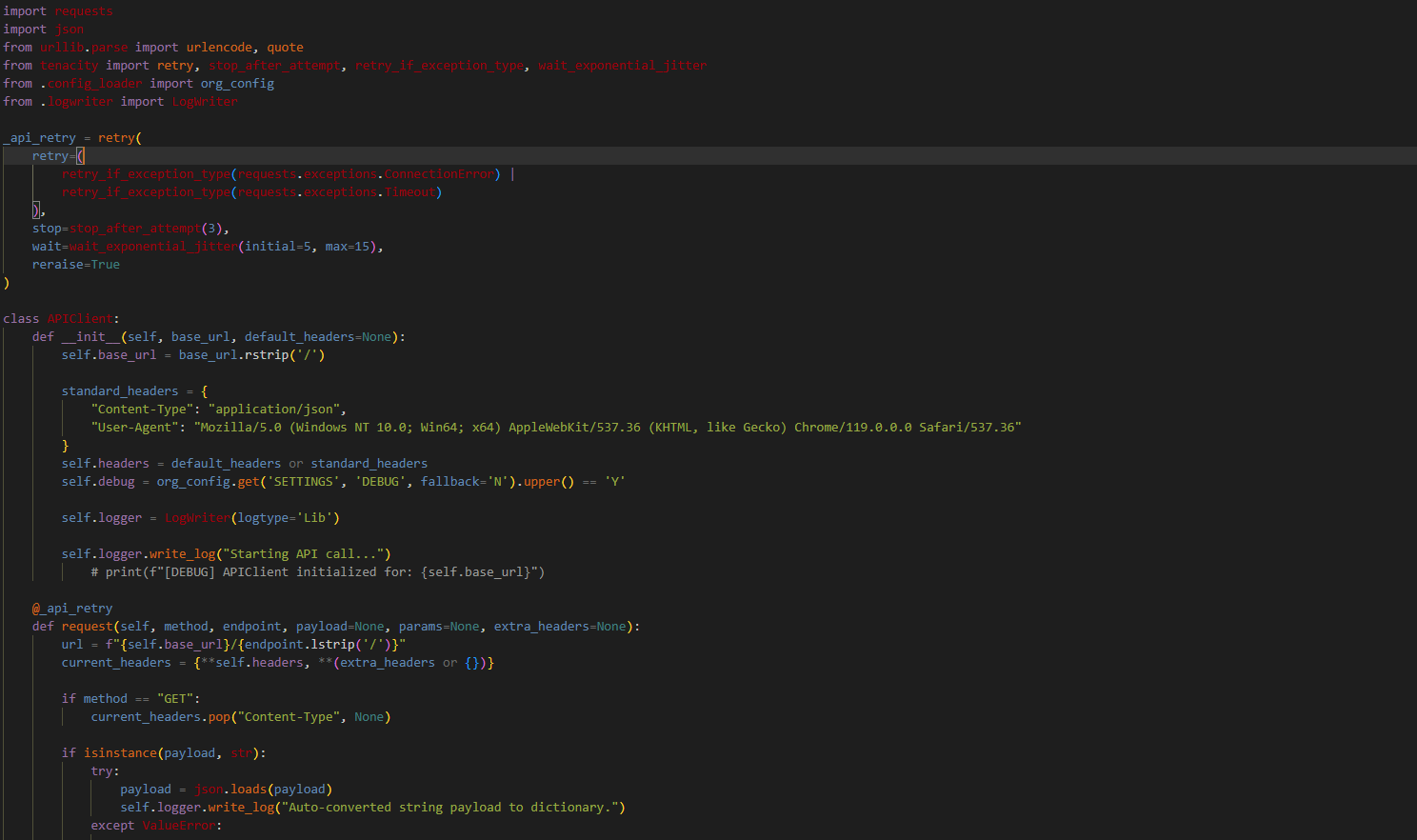
Database Orchestration: Connecting to instances and executing queries.
-
API Management: Handling authentication,
GET,POST,PATCH, and error handling. -
File Operations: Managing storage, directories, and handling format conversions (JSON to CSV, Excel to CSV, etc.).
-
Security & Crypto: Managing SFTP transfers, encryption/decryption routines, and handling sensitive keys.
-
Core Utilities: String sanitization, sending email notifications, and configuring runtime logging.
When every developer builds their own version of these utilities, it has created a massive amount of technical debt.
The Fallout
This has resulted in severe operational and security risks:
-
Fragmented Codebases: The same logic exists in ten different flavors across fifty different repositories.
-
Security Vulnerabilities: Hardcoded credentials slip through, configuration files (
.ini,.env) multiply uncontrollably, and encryption keys end up scattered across various servers. -
The Maintenance Nightmare: If an API endpoint changes, an auth rule rotates, or a database password updates, it triggers an extensive, multi-repository refactoring nightmare.
-
Observability Black Hole: With no centralized logging standard, tracking down a cross-service bug requires digging through stray log files scattered across different environments
The Solution: Building a Centralized Python SDK
Instead of letting every project dictate its own rules, the solution is to treat your internal tooling like a product.
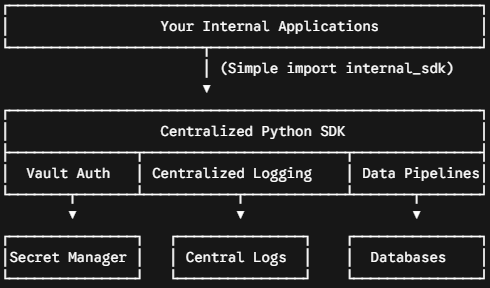
The idea was simple: Build a proprietary, centralized Python library that acts as an internal SDK for your developers.
The Work:
<<Will summarise the work here>>